
Nest Boxes & Hollows
Hollow Watch
A free tool to record, monitor and learn from nest boxes and tree hollows, both introduced and natural, wherever you are. Built on ProofSafe — the field data platform already underpinning ecological and compliance fieldwork, including ongoing work with key government research bodies.
You own your data. Only a limited, defined set of details is ever shared with other participants. And it's free, forever.
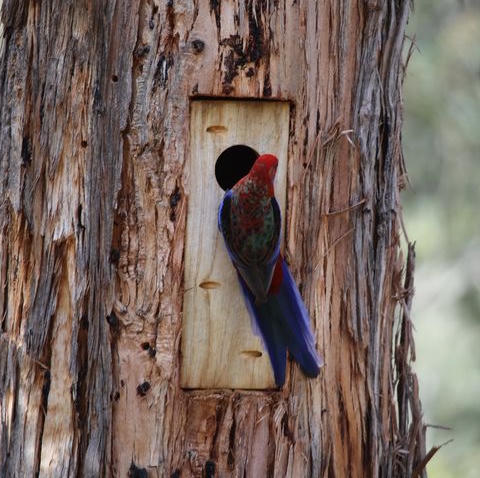
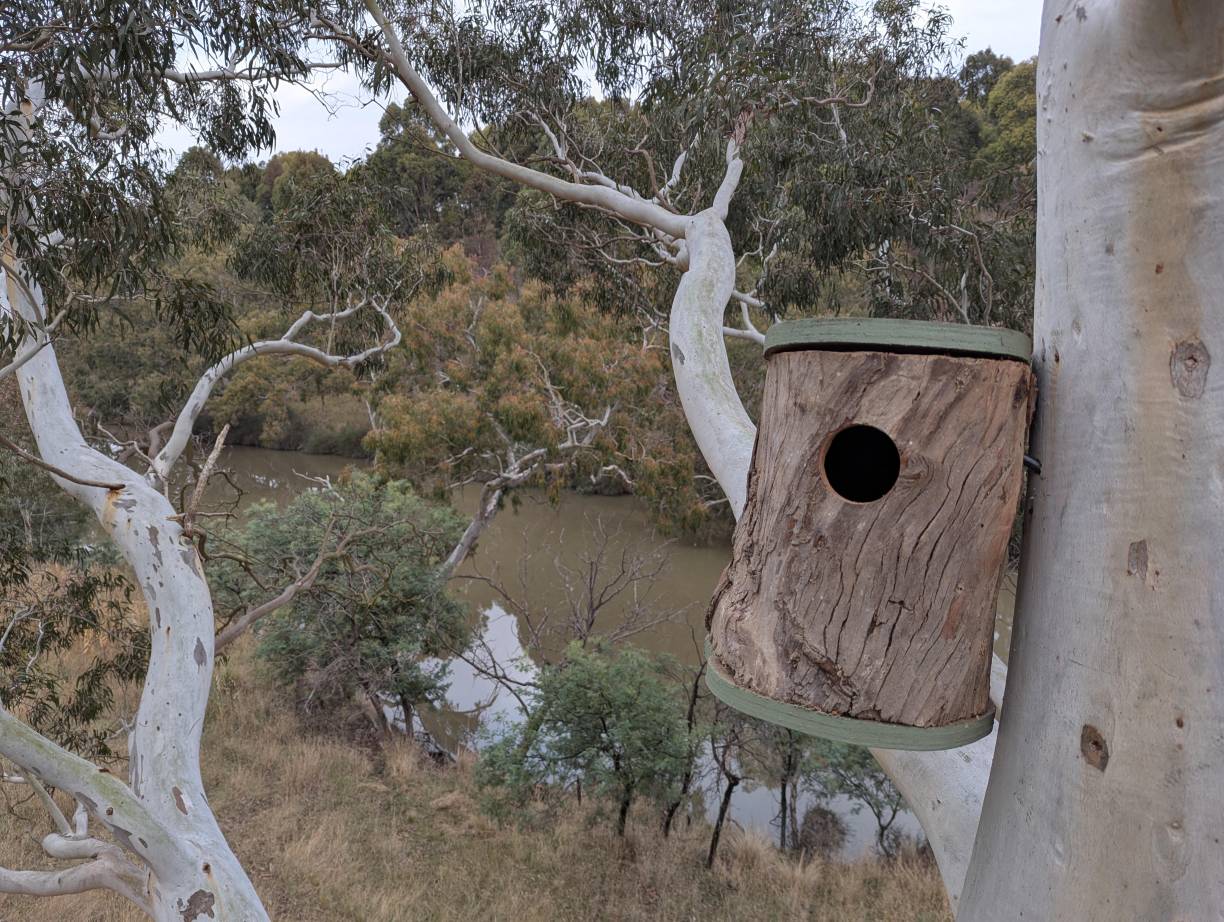
Hollow-dependent species require habitat
Across forests and woodlands worldwide, hollow-dependent species — owls, parrots, gliders, possums, bats and many more — rely on tree hollows that take generations to form. As old trees are lost, so are the hollows. Introduced habitat such as nest boxes can help, but only if we actually learn what works.
Hollows take 100+ years to form
Land clearing, logging, development and fire have destroyed hollow-bearing trees faster than they could ever regrow, wherever they once stood. These old trees, and surrounding vegetation, are an essential, irreplaceable part of the ecological mix.
Nest boxes and other introduced hollows can support species under pressure — but we need to learn from what's already out there and check these actions are actually working.
Data is scattered and lost
Councils, community groups, researchers and backyard enthusiasts all install nest boxes and now introduced cavities — but the data stays in spreadsheets, field notebooks, filing cabinets or nowhere at all. No one can learn from it.
We don't know what works
What box design best suits which species? How long do they last? What orientation is best? How do host trees respond? Without aggregated, long-term data, we're often guessing.
Nest boxes help. They don't replace what's already lost.
Before anything else, this needs to be highlighted: protecting and retaining existing hollow-bearing trees is always the first priority. Nest boxes and other introduced hollows are a valuable, sometimes necessary, supplement — not an equivalent substitute — for genuine habitat. They can buy time and support species under pressure, but they don't replicate the ecological complexity of vegetation incorporating a hollow that's taken a century or more to form.
Hollow Watch exists to help everyone understand nest boxes and introduced hollows properly — including their limits — not to suggest they're a fix for habitat loss.
One global dataset. Built by everyone.
Hollow Watch uses ProofSafe to provide a single, searchable, long-term dataset of nest boxes and tree hollows — while every contributor keeps control of their own records.
Record from the field
Use the free ProofSafe app to log nest box and hollow details — species, dimensions, aspect, height, host tree, GPS location, photos.
Works offline
Deep in the field with no signal? No problem. The app works fully offline and syncs everything when you're back in range.
Come back in 1 year or 10
Navigate back to the exact tree on the ProofSafe mobile app using GPS. Record new observations — occupancy, condition, damage, species changes. Build a long-term picture.
A growing global dataset
Every record logged adds to a shared body of evidence that researchers and councils can draw on — while your own full data stays under your control.
Sensitive data protection
Working with a threatened species or a sensitive site? Obfuscation hides both the exact location and the species identity from everyone including other Hollow Watch participants. You keep full, precise records for your own team.
Map everything
View your nest boxes and hollows on a map. See patterns, identify gaps, plan new installations and navigate back to any site.
Your data. Your control over what others see.
The objective is to build a large, instructive dataset that helps in this space, while keeping confidential information protected.
- You own it. Every record you log sits inside your own organisation's ProofSafe project.
- Your team always sees everything. Managers within your team have full access to every measurement, photo, GPS point and note you've recorded.
- Other participants see less, by default. Hollow Watch shares only a defined set of details from your records into the wider dataset — not your full data. Exactly which fields are shared is set at a platform level.
- Obfuscation protects sensitive records. For threatened species or sensitive sites, both exact location and species identity are hidden together in whatever is shared.
- Need something more specific? Some organisations, particularly research projects with their own ethics or data-governance requirements, need a tailored arrangement. We can work directly with your group to set up custom privacy and sharing settings; just get in touch.
The wider dataset gets stronger as more organisations contribute. What you record stays yours, and only ever a limited, defined slice of it leaves your own project unless you specifically arrange otherwise.
Finally, the data this work deserves
Generations of professional and volunteer effort have gone into installing nest boxes, with remarkably little structured, longitudinal evidence to show what actually works. Hollow Watch exists to close that gap properly — as serious infrastructure for understanding arboreal habitat, not a side project.
Built around real ecological practice
ProofSafe is built and engineered by people working in arboriculture and ecological consulting, including ongoing involvement with research bodies such as the Arthur Rylah Institute and a range of universities. Hollow Watch is new, but the platform underneath it isn't — ProofSafe already underpins ecological and compliance-grade fieldwork for research institutions and government bodies.
Engineered for fieldwork
This is the same engineering used for environmental and workplace safety compliance work — GPS-stamped, timestamped, photographed and auditable. Hollow Watch runs on that same foundation, not a stripped-down survey form.
Data hosted where it needs to be
By default, your data is hosted on Microsoft Azure servers in Australia. For organisations with specific regional or regulatory requirements, data can also be routed and hosted elsewhere — flexibility already proven in deployments outside Australia.
An Australian-built team, opening this broadly
Hollow Watch is built by an Australian team with deep roots in ecology and arboriculture — now extending a field-proven tool to anyone, anywhere, working on the same problem.
For everyone who cares
This is open citizen science. Anyone can contribute. The more people recording, the better the dataset.
What you record
Simple, structured data that adds up over time.
Box or hollow details
Type, design, material, dimensions, entrance size, aspect, height and installation date. For natural hollows: cavity type, opening size and depth.
Host tree data
Species, DBH, health and structure. Track how the tree responds to the installation over time.
Occupancy & species
What moved in? What moved out? Breeding activity, competition between species and seasonal patterns. The data that drives real research.
Photos & evidence
Capture photos of boxes, hollows, occupants and conditions. Annotate with markup. All timestamped and GPS-tagged.
GPS location
Every record pinned to an exact location. Navigate back to any tree, any time. View installations across your area or your whole network.
Condition & maintenance
Damage, weathering and repairs needed. Track how long different designs last in different environments, work required and repairs undertaken.

Asset data that grows more valuable every year
A nest box recorded today becomes a data point, a digital asset. Revisited in a year, it becomes a trend. In ten years, it's part of a dataset that can drive real conservation outcomes.
Hollow Watch is about building something researchers, councils and environmental groups can use to make better decisions for hollow-dependent species into the future.
- Drive innovation in nest box design and placement
- Understand which species use which habitat types
- Track long-term durability of materials and designs
- Measure real outcomes for threatened and endangered species
- Provide evidence for funding and policy decisions
- Support PhD and academic research with a broad, aggregated dataset
What's next: from data to dialogue
Hollow Watch starts with the most useful thing to build first: a free, properly engineered way to capture consistent data that's currently scattered across spreadsheets, notebooks and nowhere at all. That's step one. Step two planning is underway.
A portal to find, publish and discuss — in development
The next phase of Hollow Watch is a portal where contributors can:
- Publish findings — turn your records into shareable summaries, not just raw data sitting in a database.
- Find others working nearby — see, at the level of detail you're comfortable sharing, who else is monitoring hollows in your region.
- Discuss issues directly — connect with councils, "Friends of" groups, researchers and arborists tackling the same questions.
This isn't live yet. Planning and design are underway, and any input on how this is best managed is welcome.
Free forever — and no per-user tax
Hollow Watch is a citizen-science initiative. If your organisation only uses the Hollow Watch form, your full use of ProofSafe stays free, forever.
- Unlimited users — your whole team, committee or volunteer group, at no cost.
- Unlimited records — log one box or ten thousand.
- No subscription, no credit card, no catch.
If your organisation later wants custom forms for other projects, larger data storage or bespoke configurations, that's a separate step into the broader ProofSafe platform, priced on a small subscription plus usage. Even then, pricing is based on data volume and configuration, never on the number of users or forms you run. We don't want cost to prevent a volunteer group, small council team or research student from involving everyone.
How to get started
Three steps. About five minutes. Access to the mobile app and web portal.
1. Get the app
Register your organisation — this can just be you — on ProofSafe.
It's free. Download the mobile app for iOS or Android.
In the mobile app there's a “Research” folder with the Hollow Watch form, ready to go.

2. Record what you see
Out in the field on the mobile app, enter a new box or edit an existing record.
Create a new record, or bring existing nest box data to your phone using “lookup” and update it. Each box or hollow is a living Asset on the system that you update over time.
Enter details, dimensions, target species, photos, GPS — and even innovations you've tried. This all works offline.

3. Upload & learn
When you upload from the mobile app, your data is safely stored in your project.
Then go to the Web Portal to see your map of boxes and hollows, photos and history.
You're always in control of what, if anything, leaves your project beyond the limited details shared by default.

Common questions
Who owns the data I record?
You do. Every record belongs to your organisation, in your own ProofSafe project. Your team always has full access; only a limited, defined set of details is shared into the wider dataset, and only with other Hollow Watch participants.
Is Hollow Watch really free forever?
Yes — for as long as your organisation only uses the Hollow Watch form, with no limit on users or records. There's no trial period and no time limit.
Who's behind ProofSafe, and is it built for serious, research-grade data?
ProofSafe has been built over 11 years by founders working in arboriculture and ecological consulting, and already underpins ecological and compliance-grade fieldwork for organisations including the Arthur Rylah Institute. It's built by an Australian team, with data hosted by default on Microsoft Azure servers in Australia, and can be hosted elsewhere for organisations with specific regional requirements.
Can we keep some data private, like a threatened species' exact location?
Yes. Obfuscation hides both the exact location and species identity together for sensitive records, while your team retains full access. If you need a custom sharing arrangement for data-governance requirements, we can set that up directly with your organisation; this may require funding.
Does Hollow Watch replace the need to protect existing habitat?
No. Protecting and retaining existing hollow-bearing trees is always the priority. Nest boxes and introduced hollows are a valuable supplement, not a substitute, and Hollow Watch helps everyone understand that distinction with real evidence.
Do we need to be a registered organisation, or can an individual or small volunteer group use it?
Anyone can use Hollow Watch — councils, universities, “Friends of” groups, individual researchers, consultants or a single backyard enthusiast. Registration means setting up a free account; it can be just you.
What happens if we want to do more than log nest boxes?
You can expand into the wider ProofSafe platform with custom forms, more data storage and bespoke configurations for a small subscription plus usage. This is priced by data volume and configuration, never by the number of users or forms.